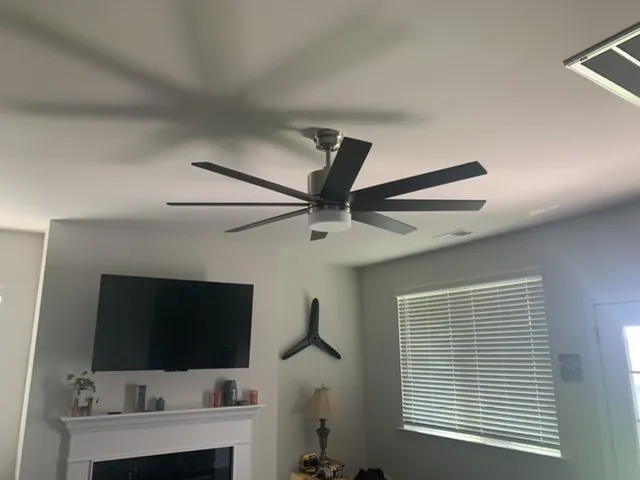

In summer, a ceiling fan should usually turn counterclockwise when you are standing below it and looking up. That setting sends air downward, creating the breeze that makes a room feel cooler on your skin. It is a small adjustment, but it matters most in the rooms where people actually spend time: bedrooms, living rooms, family rooms and covered porches.
Ceiling fans do not replace air conditioning or make the air itself colder. They make people more comfortable by moving air across the skin. That distinction is useful because it changes how to use one well: run the fan when the room is occupied, turn it off when no one is there, and make sure the direction is helping rather than quietly working against you.
The quick answer: counterclockwise for summer
Look up at the fan from below. During warm weather, the blades should rotate counterclockwise. In that direction, the fan creates a downdraft, which is the direct breeze you should feel under it. Both Hunter Fan’s seasonal direction guide and Home Depot’s homeowner guide make the same point: counterclockwise is the usual warm-weather setting.
The easiest check is not memorizing a switch position. Stand in the room with the fan running at a comfortable speed. If you feel a clear, gentle breeze coming down from the fan, it is likely in the right direction for summer. If the fan seems to be pulling air upward and the room feels still below it, it may be set for winter instead.
Why the direction changes how the room feels
A fan does not lower the temperature shown on the thermostat. What it does is create air movement, which helps perspiration evaporate and makes your body feel cooler. That is why the summer setting is about a downward breeze. A fan running in the opposite direction may still move air around the room, but it does not give you the same direct cooling effect.
That also explains why a ceiling fan should not run in an empty room just to “cool it down.” Save the fan for the places where people are sitting, sleeping or working. In a bedroom, it can make bedtime more comfortable. In a family room, it helps take the edge off a sunny afternoon. On a covered porch, the right fan and a little air movement can make the space much more usable during the warm months.
Before buying a new fan or changing out an old one, it helps to think about the room as a whole. The site’s Charlotte ceiling fan installation page explains what makes a straightforward replacement different from a project that needs a closer electrical assessment. A good fan in the wrong location, at the wrong height or on an unsuitable support point will not solve the comfort problem you are trying to fix.
How to change a ceiling fan’s direction safely
Start by turning the fan off and waiting until the blades have stopped completely. Do not reach toward a moving fan, and do not try to change a control while the blades are still spinning. Once the fan is stopped, the reverse control is usually handled one of three ways: a small switch on the motor housing, a button on the remote, or a wall control.
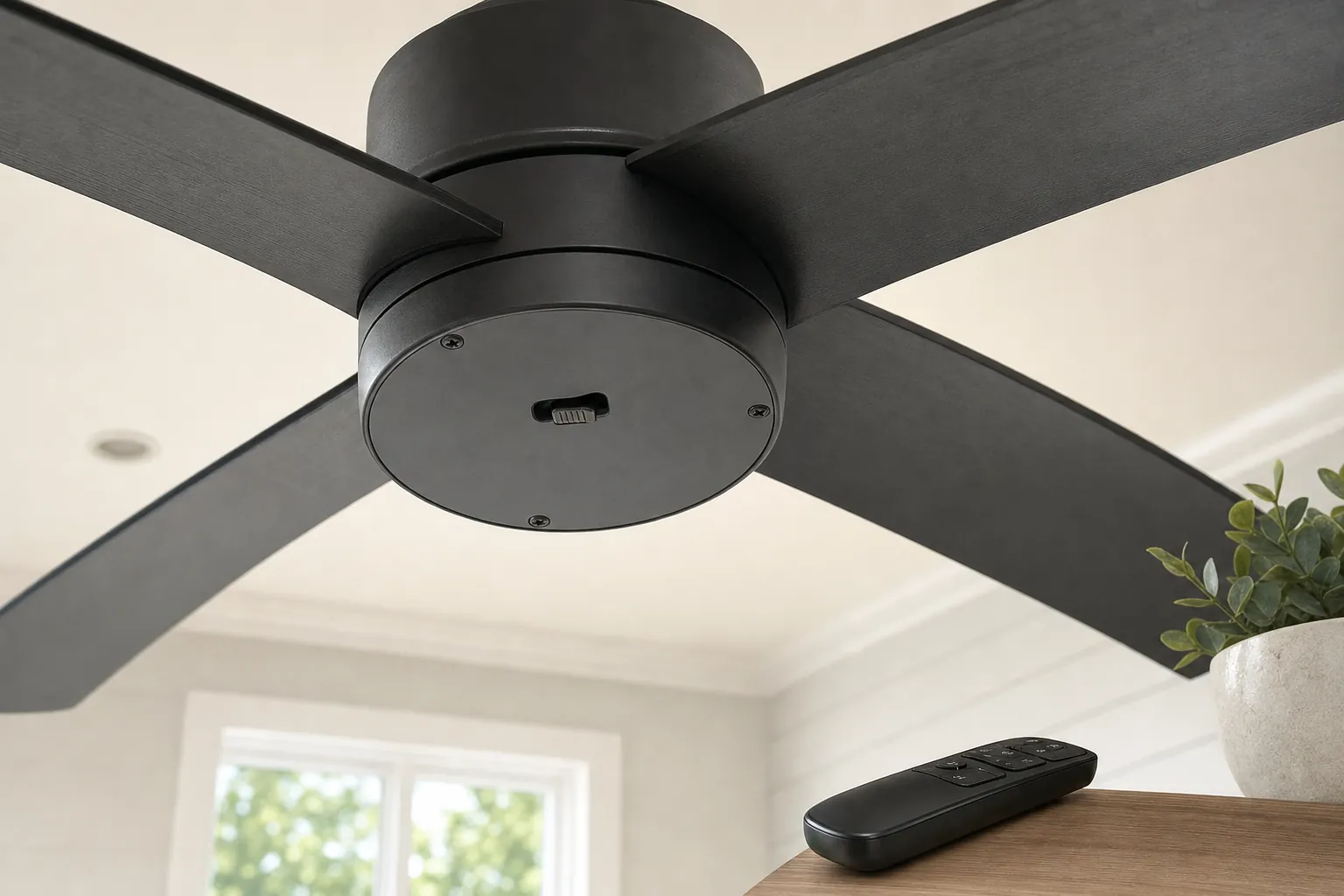
For an older fan, look carefully around the motor housing for a small slide switch. It can be easy to miss because it is often tucked near the light kit or above the blade arms. For a newer remote-controlled fan, the reverse function may be on the remote or in the manufacturer’s app. The exact button varies by model, so the fan manual is more useful than a generic diagram when the controls do not match what you see.
- Turn the fan off. Let the blades stop before touching any control.
- Find the reverse control. Check the motor housing, remote or wall control.
- Change the setting. Use the manufacturer’s instructions when the switch or button is not obvious.
- Turn the fan back on. Stand below it and make sure you feel the downward breeze expected in summer.
If a control is missing, a remote is not responding, or the fan makes an unusual noise after a setting change, do not force it. That is the moment to pause and get the setup looked at. The business handles practical home installations and repairs, and it is always better to identify a simple control issue before it becomes a bigger repair.
Choose the speed for the room, not the biggest breeze
More speed can feel great on a hot day, but the highest setting is not always the best setting for every room. A bedroom often feels better with a steady low or medium breeze that does not create too much noise. A large living room may need more airflow when people are gathered there. A covered porch can need a different approach because humidity, open sides and the fan’s outdoor rating all matter.
Use the speed that makes the people in the room comfortable. If papers are blowing around, curtains are snapping, or the fan feels like it is dominating the room, back it down. The goal is a comfortable, even breeze, not a wind tunnel. If you are shopping for a replacement, room size, ceiling height and the fan’s airflow rating matter more than choosing based on blade count or a finish photo alone.
A fan that wobbles or clicks at higher speeds is not something to ignore. First make sure the blades are clean and nothing is loose. If the wobble continues, stop using it until the mounting and blade hardware can be checked. A rotating fan needs a secure, appropriate support point; tightening a random visible screw is not a substitute for knowing the fan is safely installed.
Summer direction is not the same as winter direction
The reverse setting is useful because summer and winter ask the fan to do different jobs. In summer, counterclockwise rotation creates the downward breeze that helps people feel cooler. In winter, a reversible fan is usually set clockwise on a low speed. That pulls air upward and gently circulates warm air down along the walls without blowing a chilly draft directly on the people in the room.
The important detail is the speed. Winter is typically a low-speed setting because the goal is circulation, not a breeze. Summer can use more speed because the direct airflow is exactly what creates the comfort effect. If you only remember one rule in July, make it this: counterclockwise and a noticeable breeze below the fan.
What to check when the breeze still feels weak
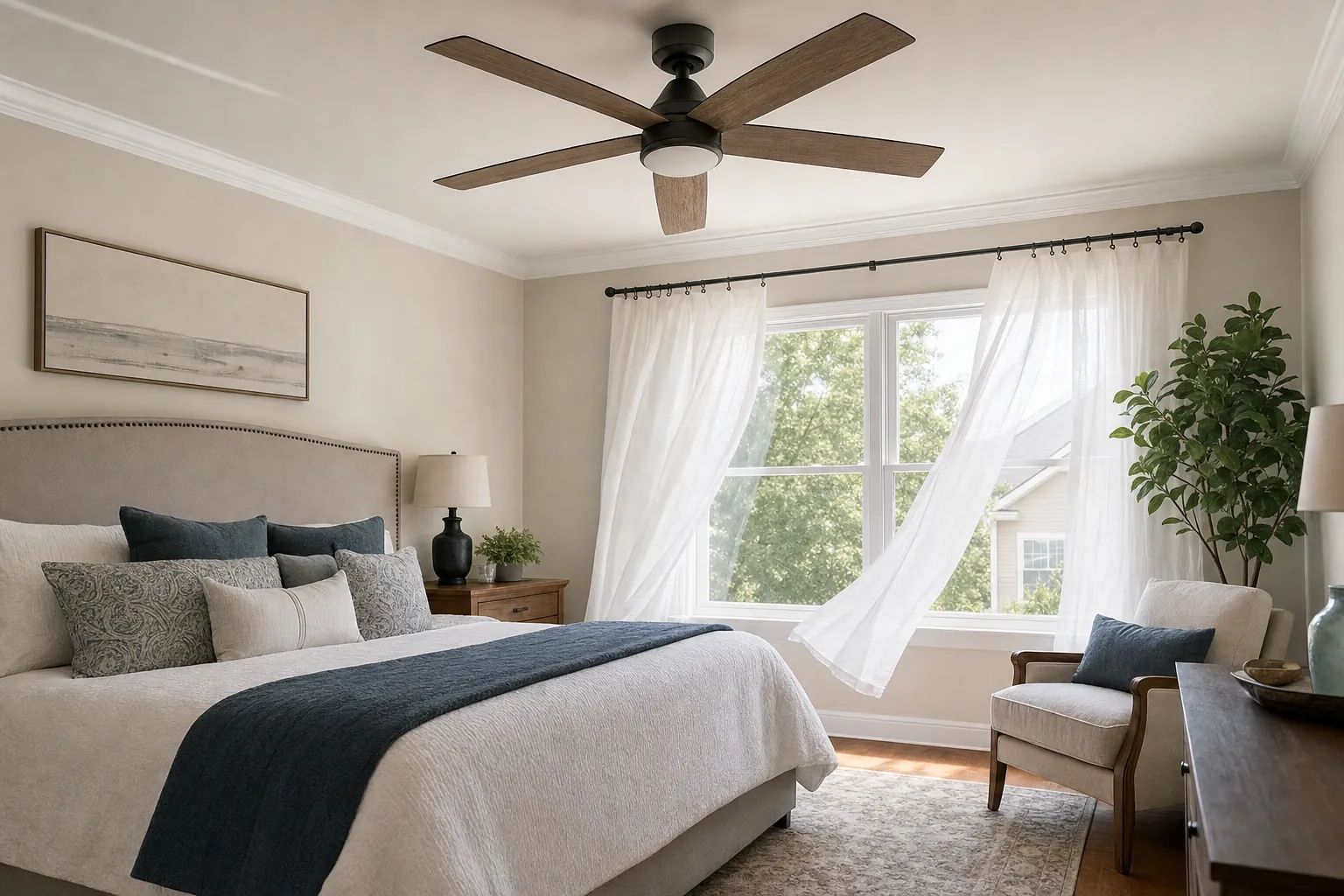
Direction is the first thing to check, but it is not the only reason a fan can feel underwhelming. A fan that is undersized for a wide room may run normally and still leave the seating area feeling stagnant. A fan tucked into one side of a large open room may not reach the people who need it. A tall ceiling can also put the blades too far from the living space for the breeze to feel useful.
Look at the fan after it is running in the correct direction. Is the airflow reaching the bed, sofa or dining table where people sit? Is a long downrod, a larger fan or a different placement worth discussing before buying another model? These are practical questions to settle before an installation appointment, especially when a room has a vaulted ceiling or an existing light fixture that is not centered where you want the fan.
Dust matters, too. A heavy layer on the blades is a reason to clean them carefully with the fan off. While you are there, check for loose-looking blade arms, a crooked canopy or a new wobble. Do not take the fan apart just to chase a setting problem. A quick visual check is useful; work on the support, wiring or controls needs the right person and scope.
It is also worth looking for simple room issues that a fan cannot solve on its own. Closed interior doors, direct afternoon sun, heavy window coverings and a thermostat set for a different part of the house can all change how a room feels. A fan is one useful part of a comfortable space, not a promise that every warm room has the same fix. Start with direction and airflow, then decide whether the room needs a fan change, a small repair or a broader plan.
When a fan direction problem is really an installation problem
Sometimes the direction setting is correct, but the room still does not feel right. That can happen when the fan is too small for the space, mounted too high, placed off-center, or installed with the wrong downrod for a tall or vaulted ceiling. It can also happen when the fan is new but the wall control, remote receiver or existing fixture location was not a good match.
Take a few photos before asking for help: one showing the whole room, one showing the fan from below, one of the wall control, and one of the fan model or remote. Those details make it easier to separate a simple setting question from a project that needs hardware, mounting or electrical attention. The published pricing page gives a starting point for standard ceiling-fan installation, while a photo-based quote can account for the details that make one room different from another.
For work that needs new wiring, a new circuit, panel changes or significant electrical troubleshooting, the right next step may be a licensed electrician. A clear answer is better than pretending every fan concern has the same solution. For a standard replacement or practical installation, Got A List? Co. can help homeowners get the details sorted and the project checked off cleanly.
A five-minute summer fan check
Once the weather turns hot, walk through the rooms where your household spends the most time. This is quick maintenance, but it can save you from discovering a poorly set fan on the first uncomfortable night of the season.
- Confirm the fan turns counterclockwise when viewed from below.
- Feel for a downward breeze while the room is occupied.
- Use a lower speed for sleep and a stronger speed for active rooms when needed.
- Listen for clicking, humming or unusual wobble.
- Check that the remote or wall control is working before it becomes a daily annoyance.
- Turn the fan off in empty rooms.
If you are already making a home list for the season, group the small, compatible jobs together. The project gallery shows the kinds of installation and repair work the team handles, from fan and light upgrades to shelves, hardware and other practical fixes. Sending the full list up front helps make one visit count.
Frequently asked questions
When you are standing below the fan and looking up, it should usually turn counterclockwise in summer. That creates a downward breeze that helps your skin release heat.
Stand below the fan while it is running. The summer setting should create a noticeable breeze below the blades. If the room feels still beneath the fan, turn it off, let the blades stop, and check the reverse control or remote.
No. A ceiling fan moves air and creates a cooling effect on people in the room; it does not lower the air temperature like an air conditioner. Turn it off when the room is empty.
A reversible fan is usually set clockwise on a low speed in winter. That gentle upward airflow helps move warm air down along the walls without making the people in the room feel a direct draft.
Some fans reverse from a switch on the motor housing, while others reverse from the remote or wall control. Check the manufacturer instructions first. If the control is missing, unreliable, or the fan has electrical symptoms, stop and have the setup assessed rather than forcing it.
Need help with a ceiling fan?
Send a photo of the room, the fan and the control you are using. We’ll help you figure out the next practical step.
Request a Free QuoteKeep planning