

A ceiling fan can make a room more comfortable, but only if it belongs in the space. A fan that is too small may leave the seating area feeling still. One that is too large can crowd a small room, feel overpowering and create clearance problems near walls or doors. The useful question is not just what size fan looks good. It is what size fan fits this room, this ceiling and the way the room is actually used.
This ceiling fan size chart gives you a practical place to start. Measure the room first, then use the blade-span ranges below to compare models. After that, think about the ceiling height, the light kit, the room shape and where people sit. Those details help you buy once instead of discovering the fan is wrong after it is already in the box.
Start by measuring the room
Use a tape measure to find the length and width of the open area where the fan will serve the room. Multiply those two numbers to get square footage. A room that is 12 feet by 12 feet is 144 square feet. A room that is 15 feet by 16 feet is 240 square feet. You do not need an architectural drawing for this. A clear measurement gives you a much better starting point than guessing from a furniture layout or a listing photo.
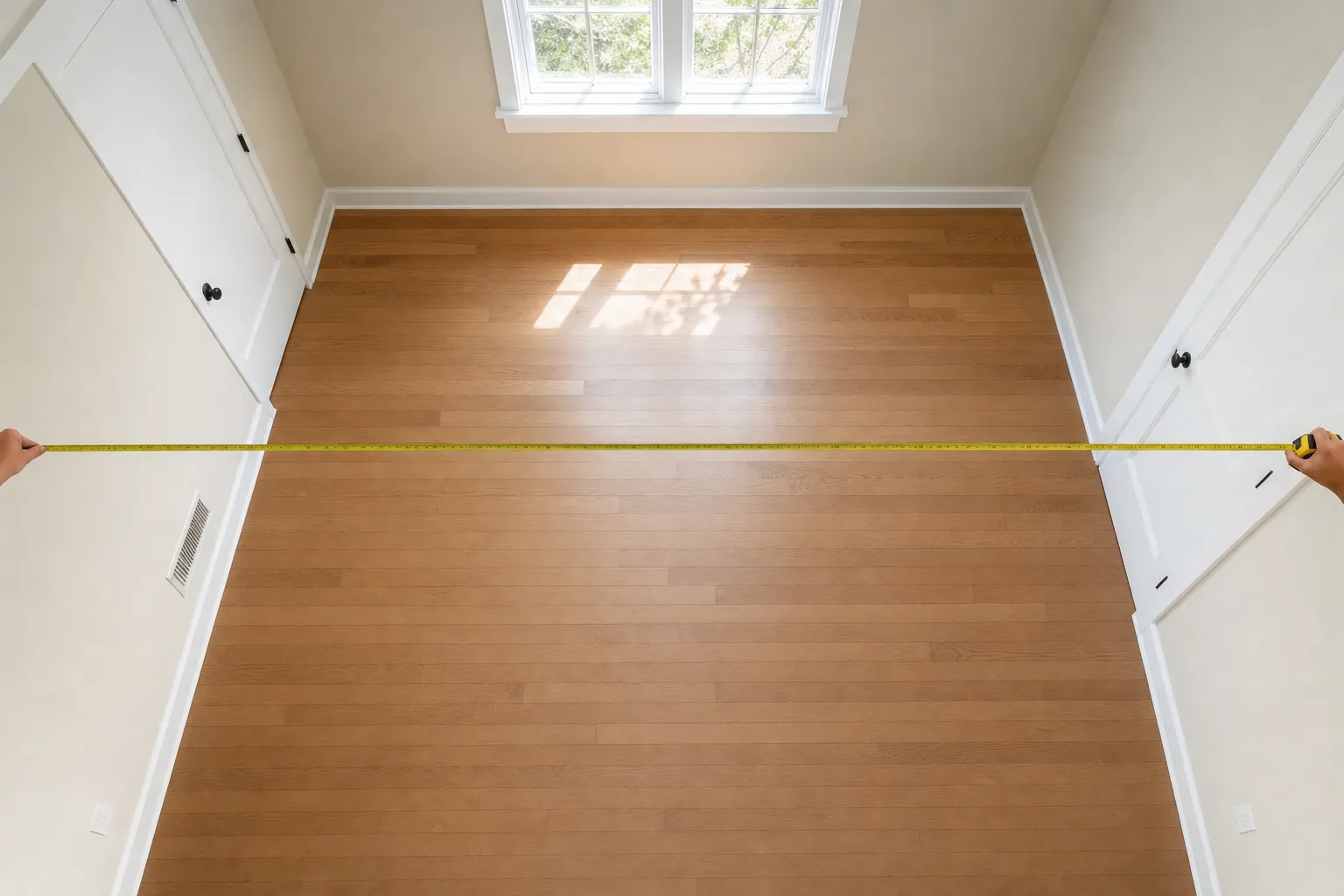
If the room is open to another space, measure the area you want the fan to serve rather than automatically treating the whole floor plan as one room. A large great room, long bonus room or open living-and-kitchen area may need more than one fan for balanced airflow. In that situation, two appropriately sized fans can make more sense than pushing one oversized model into the center.
Also look up. A room measurement tells you about width, but the ceiling height changes how the fan should be mounted. A standard-height bedroom and a tall vaulted living room may have similar square footage but need very different mounting plans.
Ceiling fan size chart by room size
The ENERGY STAR ceiling fan guide uses room square footage to suggest a blade-span range. Treat this as a practical first filter when you shop, then confirm the final model against its manufacturer instructions and the real mounting location.
| Room size | Suggested blade span | Common spaces |
|---|---|---|
| Up to 75 sq. ft. | 29 to 36 inches | Small offices, laundry rooms and compact nooks |
| 76 to 144 sq. ft. | 36 to 42 inches | Smaller bedrooms, home offices and dining areas |
| 144 to 225 sq. ft. | About 44 inches | Bedrooms, kitchens and medium rooms |
| 225 to 400 sq. ft. | 50 to 54 inches | Living rooms, larger bedrooms and open family rooms |
Blade span means the distance across the fan from the tip of one blade to the tip of the opposite blade. On a fan with an odd number of blades, measure from the center to one blade tip and double that number. That is the number retailers use when they label a fan as 36 inches, 44 inches or 52 inches.
The chart is intentionally simple. It is meant to help you avoid the most common mismatch: choosing a fan based only on how the finish looks. A 52-inch fan is popular for a reason, but it is not a default answer for every bedroom, hallway or low-ceiling space.
Match the blade span to the room, then check the layout
Once you have a likely size range, stand in the room and think about where the fan will sit. In a standard bedroom, the best location is usually close to the center of the usable space, not automatically centered over the bed. In a living room, think about the sofa, chairs and the place where people actually gather. The goal is useful airflow where the room is occupied.
Furniture can make a room feel smaller or larger, but it does not change the physical clearance a fan needs. ENERGY STAR advises mounting a ceiling fan in the middle of the room, at least 7 feet above the floor and at least 18 inches from walls. If your planned location cannot meet those basics, pause before buying the fan and get a closer opinion on the layout.
Do not use blade span as a promise of performance by itself. Motor design, blade shape and the model’s published airflow all play a role. The right span gets you into the right category. Comparing the actual fan, including its controls, light kit and mounting options, gets you to the right choice.
Ceiling height changes the mounting choice
A fan needs to sit at a useful height, not simply as close to the ceiling as possible. According to ENERGY STAR, a fan should be at least 7 feet above the floor, and 8 to 9 feet above the floor is the preferred range when the ceiling allows it. That is why the same 44-inch or 52-inch fan can need a different mounting setup in two different homes.

For an 8-foot ceiling, a low-profile or hugger fan may be the practical option because it keeps the blades up high. This is a tradeoff worth understanding before you buy. A hugger fan is designed for low ceilings, but its blades sit closer to the ceiling and may move less air than a standard mount. If the fan includes a light kit, include that extra drop in your measurement too.
For a standard 8- to 9-foot ceiling, many fans work with the short downrod included in the box. Taller ceilings often need a longer downrod to bring the fan into the useful 8- to 9-foot range. Sloped and vaulted ceilings may need a compatible angled-mount kit as well. Do not assume every fan supports every angle or extension. Check the model instructions before the purchase, especially when the ceiling is high or not flat.
Make the fan fit the room's job
Room type helps you decide which features matter after you narrow the size. A bedroom may call for a quiet motor and a remote that is easy to use from bed. A dining room may need a fan with a light kit that suits the room. A family room can benefit from a larger model and stronger airflow. A covered porch needs the right size and the right environmental rating.
For a damp bathroom, covered porch or another humid location, check the rating before you fall in love with a finish. ENERGY STAR notes that damp-rated fans are intended for humid locations, while wet-rated fans are for locations that may come into direct contact with water. A fan that is the right size but wrong for the exposure is still the wrong fan.
Controls matter too. Decide whether you want a pull chain, wall control, remote or smart controls before ordering. A remote can be convenient in a tall room, but it can also add a receiver and setup details that should be included in the plan. When you request an installation quote, send the exact model or a link to it. That gives the person doing the work a clear view of the fan, light kit and controls before the visit.
What to do with a long, open or vaulted room
Large rooms are where a simple chart needs the most judgment. A long living room may have enough square footage for a 54-inch fan, but the airflow can still miss the sofa at one end. A vaulted room may have plenty of floor area but place the blades too high if the fan is mounted without the right downrod. An open plan may need two fans to serve separate gathering areas rather than one giant fan trying to do everything.

Start by identifying the room's active zones. In a big family room, that may be the seating group and a separate breakfast table. On a covered porch, it may be the dining set and the conversation area. Two smaller fans can give each zone a more even result and may look more intentional than one extra-large model. The right answer depends on where the electrical locations are, how the ceiling is framed and how the room is used day to day.
High ceilings are also a good reason to slow down before purchasing. The fan may need a longer downrod, and the mounting location should be assessed for safe support. If you are replacing a light fixture or working around an existing box, share a wide room photo, a photo looking up at the ceiling and the fan model. The ceiling fan installation page for Charlotte explains what makes a standard replacement different from a project that needs a closer electrical assessment.
How to choose without creating an installation surprise
Before you order, make a short checklist. Measure the room. Measure the ceiling height. Confirm the planned fan location. Choose a fan that has the right mounting options for that ceiling. Check whether it needs a light kit, remote receiver or separate wall control. Finally, keep the box, instructions and hardware together until the installation is complete.
It is also worth checking the published airflow information when you are comparing two models in the same size range. The ENERGY STAR product criteria explains that ceiling fan efficiency is measured in airflow per watt, often shown as CFM/W. You do not need to turn this into a spreadsheet, but it is a better comparison than blade count alone when you want a fan that actually moves air efficiently.
For a straightforward fan replacement, Got A List? Co. lists ceiling fan installation from $80 on the published pricing page. A standard replacement is the simplest case. A tall ceiling, a new location, an unsuitable support point, new wiring or significant troubleshooting can change the scope. A clear photo-based quote is the honest way to separate those situations before anyone arrives.
When to ask for help before buying
Ask for a closer look before buying when the ceiling is unusually high, vaulted or sloped, the planned location has no existing fixture, the current fan wobbles, or the wiring and wall control are unclear. Those are not reasons to abandon the project. They are reasons to make sure the fan, room and installation plan agree before the work begins.
Got A List? Co. handles standard ceiling fan installations and other practical home installation and repair work. For new circuits, panel work, major electrical troubleshooting or other work that requires a licensed electrician, the right next step is an electrician. For a standard fan project, a few good photos and the model details can make the path forward much clearer.
If you are building a list for one visit, include the related small jobs too. The project gallery shows the kind of practical installation and repair work the team handles, and the service-area page can confirm whether your home is currently in range. Grouping compatible jobs helps turn one appointment into a useful reset for the list at home.
Frequently asked questions
A 12 by 12 room is 144 square feet. A 36 to 42 inch fan is a sensible starting point under the ENERGY STAR room-size guide, but ceiling height, furniture placement and the fan model can still change what feels right in the room.
For a fan with an even number of blades, measure straight from one blade tip to the opposite blade tip. For an odd number of blades, measure from the center to one blade tip and double it. That number is the blade span used when comparing fan sizes.
Yes. A large fan can feel visually heavy in a small room and may not leave the recommended clearance from nearby walls. Measure the room before buying, then check the manufacturer instructions and the planned mounting location.
A low-profile or hugger fan is often considered for an 8-foot ceiling because it keeps the blades as high as practical. The final choice should still preserve safe clearance from the floor and account for any light kit.
A taller or vaulted ceiling often needs a downrod so the fan sits at a more useful height instead of being stranded near the ceiling. Check the fan manufacturer’s guidance for the specific model and ceiling slope before buying an extension.
Need help choosing or installing a fan?
Send a photo of the room, the ceiling and the fan you have in mind. We’ll help you figure out the next practical step.
Request a Free QuoteKeep planning
Related guides
Ceiling Fan Installation Cost: What to Expect
The practical details that shape a ceiling fan installation quote, from replacing an existing fan to a new location.
Read the guide →
Ceiling Fan Direction in Summer: Which Way?
Set your ceiling fan for a cooler-feeling room, learn how to check the direction, and know when a setup problem needs a closer look.
Read the guide →